Many private label brands struggle to choose the right capsule material. The wrong choice can limit market access, increase regulatory risk, and weaken brand positioning. This issue becomes more serious as consumer expectations change. Buyers now care about sourcing, diet compatibility, and long-term stability.
HPMC and gelatin capsules dominate the hard capsule market, yet they serve very different needs. Understanding how each material performs in today’s market helps U reduce risk and build products that sell.
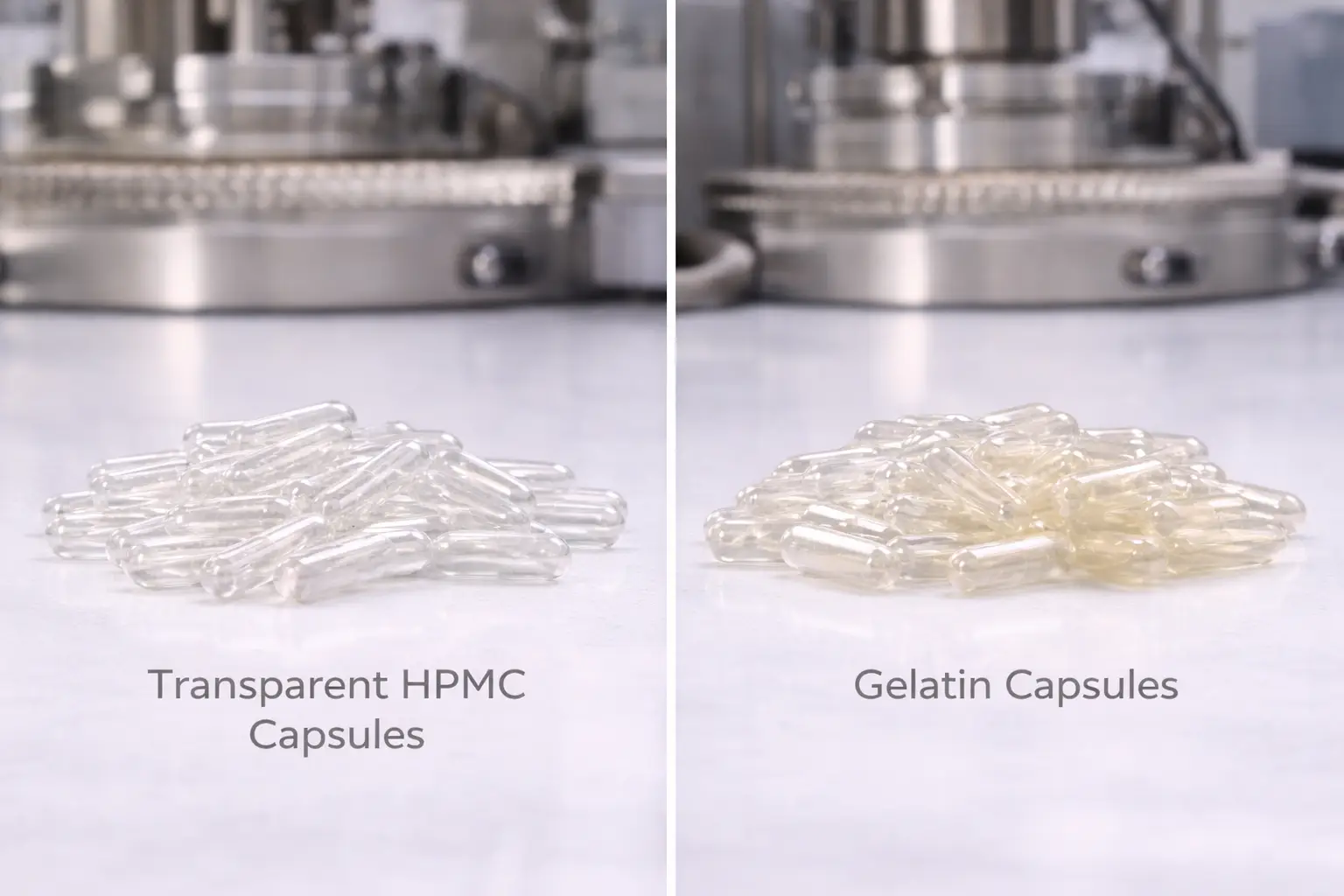
HPMC capsules are plant-based, stable in diverse climates, and suitable for vegetarian, halal, and clean-label positioning. Gelatin capsules are cost-efficient, widely accepted, and ideal for high-speed mass production. In 2025, demand is shifting toward HPMC due to dietary trends and export compliance, while gelatin remains strong in price-driven and traditional markets. The right choice depends on U target consumers, regulatory goals, and product strategy.
Capsule material is no longer a technical detail. It is a market decision. To choose correctly, U need to understand materials, trends, and buyer behavior.
What Are Gelatin Capsules?
Gelatin capsules remain the most widely used hard capsule format worldwide. They have a long history in pharmaceuticals and dietary supplements. Many large-scale brands still rely on gelatin because of its proven performance and cost efficiency.
Gelatin capsules are made from animal-derived collagen. They offer good mechanical strength and fast dissolution.
Gelatin capsules are produced by extracting collagen from bovine or porcine sources. The material forms strong, elastic shells that perform well in high-speed filling lines. This makes gelatin ideal for large-volume production.
Key technical characteristics include:
| Feature | Gelatin Capsules |
|---|---|
| Source | Animal collagen |
| Cost | Lower |
| Dissolution | Fast |
| Machine compatibility | Excellent |
| Climate sensitivity | Moderate |
However, gelatin capsules are sensitive to heat and humidity. This can create challenges in tropical markets. They also face limitations in vegetarian, halal, and kosher positioning.
- Gelatin capsules support high-speed, cost-focused manufacturing.
- Gelatin remains dominant in price-sensitive supplement markets.
What Are HPMC Capsules?
HPMC capsules reflect how supplement markets are evolving. Brands use them to align with plant-based, ethical, and global compliance trends. This makes HPMC a strategic choice rather than just a material upgrade.
HPMC capsules are plant-based and offer strong stability across climates.
HPMC, or hydroxypropyl methylcellulose, is derived from plant cellulose. The material creates rigid capsule shells with low moisture sensitivity. This improves shelf stability and reduces cracking or deformation.
Core advantages include:
| Feature | HPMC Capsules |
|---|---|
| Source | Plant cellulose |
| Dietary fit | Vegetarian, halal |
| Moisture tolerance | High |
| Global acceptance | Strong |
| Cost | Higher |
HPMC capsules work well with hygroscopic and moisture-sensitive formulations. They also perform better in hot and humid regions, making them suitable for Southeast Asia, the Middle East, and Latin America.
- HPMC capsules support clean-label and plant-based branding.
- HPMC improves stability for global distribution.
How Do HPMC and Gelatin Capsules Differ in Manufacturing?
From a factory view, capsule choice affects yield, speed, and defect rates. These factors influence final product cost and delivery timelines.
Gelatin favors speed. HPMC favors stability and flexibility.
Gelatin capsules flow smoothly on high-speed equipment. This reduces downtime and supports mass production. HPMC capsules require more controlled settings but offer wider formulation compatibility.
| Aspect | Gelatin | HPMC |
|---|---|---|
| Filling speed | Faster | Moderate |
| Moisture tolerance | Lower | Higher |
| API compatibility | Standard | Broad |
Factories often recommend gelatin for standard multivitamins and HPMC for premium or export-focused products.
- Manufacturing efficiency differs by capsule material.
- Capsule choice impacts cost and defect control.
What Do Market Trends Say About Capsule Demand in 2025?
Capsule demand mirrors consumer behavior and regulatory pressure. In 2025, both forces favor diversified capsule strategies.
HPMC demand is growing faster than gelatin in global markets.
Plant-based diets, religious compliance, and clean-label trends push HPMC growth. At the same time, gelatin maintains volume leadership in mature markets.
| Market Factor | Impact |
|---|---|
| Vegetarian growth | HPMC up |
| Export compliance | HPMC up |
| Cost pressure | Gelatin stable |
Private label buyers increasingly request both options to cover different SKUs.
- Capsule diversification supports market expansion.
- HPMC drives premium segment growth.
How Do Consumer Preferences Influence Capsule Choice?
Consumers no longer see capsules as neutral packaging. They associate materials with values and safety.
Capsule material affects trust and purchase decisions.
Consumers look for plant-based claims, allergen clarity, and ethical sourcing. This drives preference toward HPMC in wellness-focused brands. Gelatin remains accepted where price matters more than sourcing.
- Label transparency increases capsule importance.
- HPMC aligns with lifestyle-driven buying.
Which Capsule Type Fits Private Label Brand Strategy?
There is no universal answer. The right capsule supports U pricing, positioning, and expansion goals.
Strategy defines capsule choice, not the other way around.
Use gelatin for cost-driven, high-volume SKUs. Use HPMC for premium, export, or lifestyle-positioned products. Many successful brands offer both to maximize reach.
- Capsule choice should follow brand strategy.
- Offering both materials increases flexibility.
Conclusion
HPMC and gelatin capsules each serve clear market roles. Gelatin leads in cost efficiency and production speed. HPMC leads in stability, compliance, and consumer trust. In 2025, private label brands succeed by aligning capsule material with market demand and long-term strategy.
U need a capsule partner who understands both materials and markets. Our factory specializes in hard capsule manufacturing with flexible options in gelatin and HPMC. U get stable quality, export-ready compliance, and OEM solutions built for scale. Partner with a manufacturer that helps U compete, not compromise.