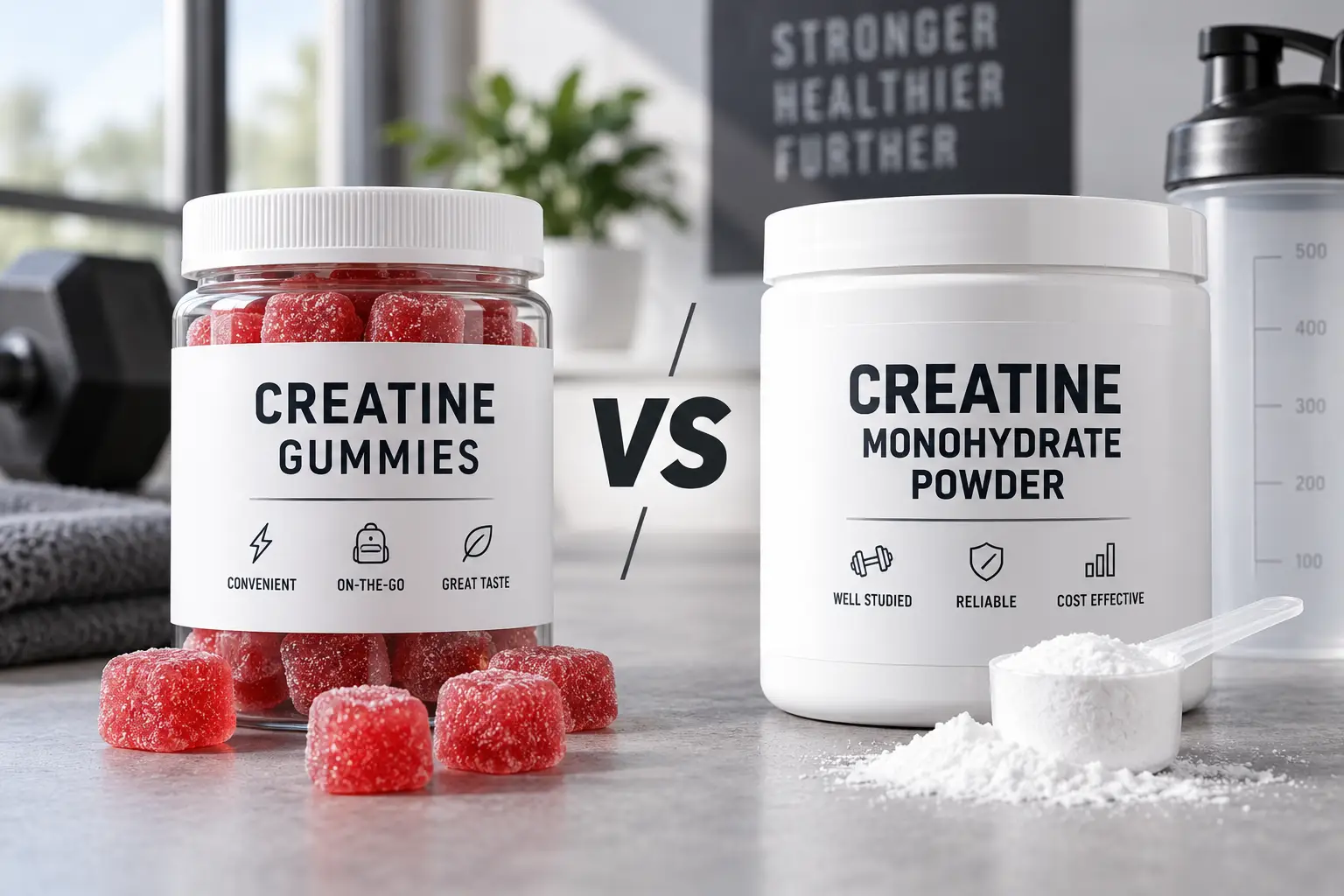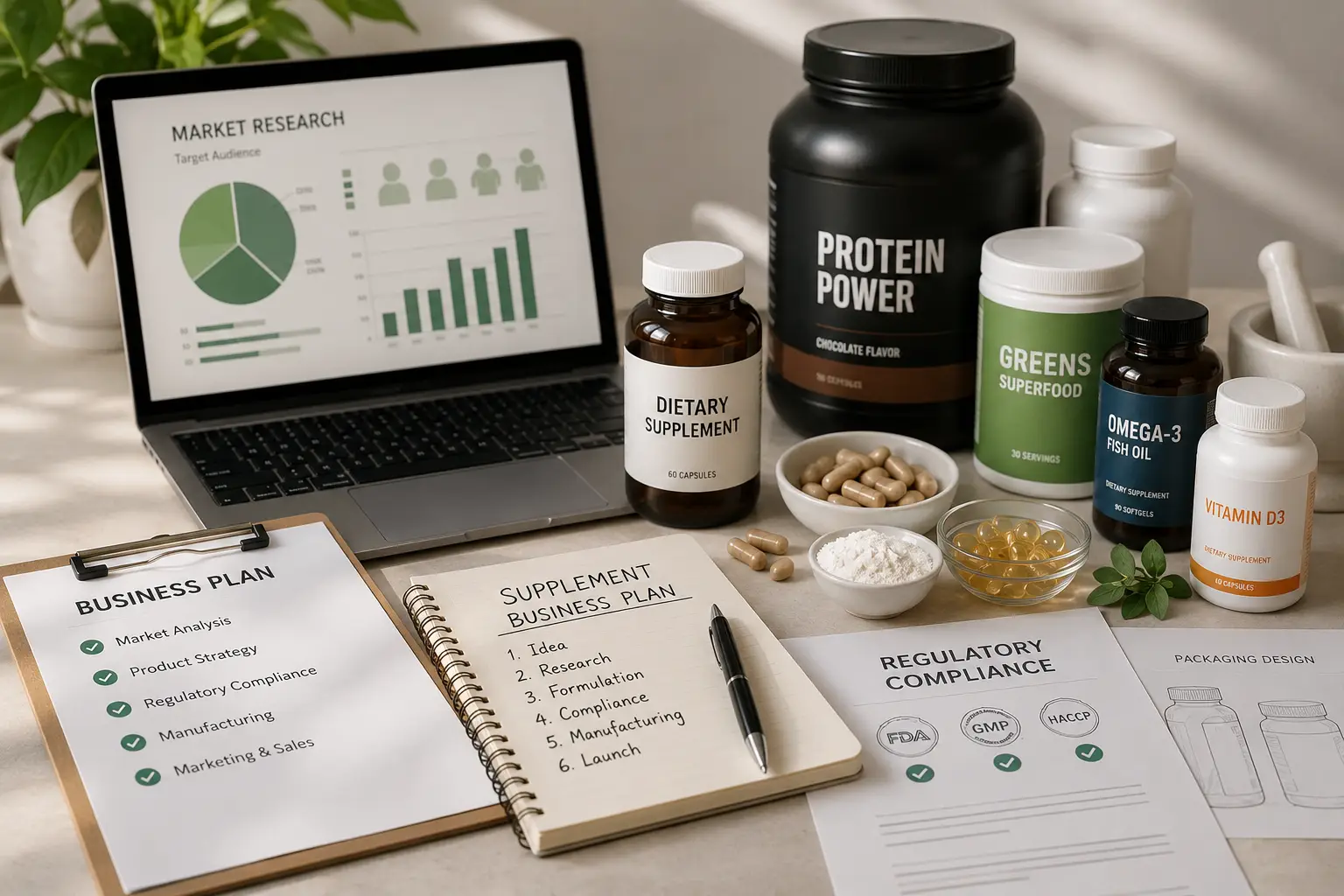
Problem: Brand owners and private label buyers face a key decision — should the next product be a gummy or a capsule? Format choice affects cost, market appeal, dosing, manufacturing complexity, and ultimately sales.
Agitation: You may invest heavily, pick the wrong format for your audience, and end up with low conversion or high returns. The wrong format can limit potency, increase sugar content (in gummies), or feel outdated (in capsules).
Solution: In 2025, understanding consumer preferences, manufacturing trade-offs, and market forecasts for both gummies and capsules is essential. This blog gives U clarity so U can decide which format will lead your product line.
Gummy supplements are experiencing strong growth thanks to convenience and flavour appeal, but capsules retain advantages in potency, stability and cost-effectiveness. For private label brands in 2025, the best choice depends on target audience, ingredient dose, manufacturing capacity and branding strategy. Market data shows gummies growing fastest, yet capsules remain the volume workhorse.
Let’s explore the format dynamics in depth—what the numbers say, what format consumers prefer, what the trade-offs are, and how your brand can choose the right path in 2025.
1. What the Market Data Says for Gummies vs Capsules?
Before making the format decision, brand owners need to anchor on the market numbers. Where is growth fastest, where is volume highest, and what are the trends in 2025?
Gummies are growing at double-digit CAGR globally; capsules still hold large share in traditional supplement channels and high-dose formulations.
Here are key data points:
-
The global gummy supplements market is projected to grow from about USD 7.29 billion in 2025 to USD 13.63 billion by 2034, at a CAGR of ~7.2%.
-
Another report estimates the gummy market to grow from USD 10.7 billion in 2024 to USD 27.1 billion by 2034 (CAGR ~9.5%).
-
A market-analysis site states that while gummies appeal widely, capsules remain preferred for high-dose, oil-based or professional formats.
-
The global dietary supplements market (all formats) is growing ~8–9% annually through the mid-2030s.
These figures show that while capsules remain dominant in volume and legacy formats, gummies are the fastest-rising format—especially in consumer-friendly segments.
* Gummy supplements are outselling capsule formats in the convenience wellness segment in 2025 for the first time.
* Capsules continue to dominate by volume in high-dose, professional, sports nutrition and global export markets.
2. Why Gummies Are Gaining Momentum?
Gummies are no longer just for kids; adults are embracing chewable formats—and the trend is especially relevant for private label brands targeting lifestyle, beauty-from-within, and women’s health categories.
Chewability, flavour, convenience, and “snack-like” experience drive gummy appeal; they meet consumer demand for enjoyable daily rituals.
Key drivers for gummy growth:
-
Consumer comfort and adoption: Gummies feel less like a medicine and more like a treat—this improves adherence. For example, one survey said adult consumers prefer gummies over pills when taste and form matter.
-
Lifestyle trend: Busy urban consumers want grab-and-go products, and gummies fit better in daily routines.
-
Design & flavour innovation: Includes plant-based, sugar-reduced, vegan gummies.
-
Demographic expansion: Historically gummy was child-focused, but now adult usage is rising significantly.
But there are trade-offs:
-
Payload can be lower per piece → may limit high-dose actives.
-
Often sugar or sweetener content higher → may be less clean-label.
-
Stability and shelf-life may be more challenging due to chewing matrix.
* Formats with unlimited flavour and chewability are increasing purchase conversion by ~30% for mainstream wellness brands.
* Adult gummy users report up to 34% higher compliance than traditional pill users.
3. Why Capsules Still Hold Strong?
Despite gummy growth, capsules and softgels remain the default for many serious formulations—especially in sports nutrition, high-potency blends, export markets, and professional channels.
Capsules offer advantages in dosage capacity, ingredient versatility (oils, bulk powders), stability, and cost-efficiency.
Advantages of capsule/softgel formats:
-
Dose versatility & potency: Capsules can carry large fill volumes, powders, oils, blends—useful for high-dose or multi-active formulas.
-
Ingredient variety specialist: Oil-based actives (omega-3s, CBD), high-loading minerals or botanicals often go into capsules/softgels rather than gummies.
-
Manufacturing & cost efficiency: Capsule production is more mature, with lower cost per unit for standard formulas.
-
Regulatory and export readiness: Capsules are familiar format globally, simpler logistics and shelf finish.
-
Clean-label ability: Without the need for flavouring, jelly matrix or chewing additives, capsules often hit cleaner label benchmarks.
But there are challenges:
-
Perceived as “medicinal” versus lifestyle product.
-
Less appeal to younger or lifestyle-oriented consumer segments.
* Capsules remain the largest segment by volume in dietary supplement form globally in 2025.
* For export-ready high-dose wellness formulas, capsule/softgel remains the format of choice for 70%+ of OEM/ODM manufacturers in 2025.
4. Format Comparison: Key Considerations for Private Label Brands?
Choosing between gummies and capsules isn’t just about market trend—it’s about matching format to your brand, target audience, ingredients, manufacturing budget and global distribution strategy.
Compare format features: consumer appeal vs technical feasibility, cost vs premium potential, clean-label vs flavour appeal, domestic vs export markets.
Here’s a comparison table:
| Factor | Gummies | Capsules/Softgels |
|---|---|---|
| Consumer Appeal | High (flavour, chewable, lifestyle feel) | Moderate (standard supplement feel) |
| Dose Capacity | Lower payload, may require multi-piece | Higher fill volumes, potent blends |
| Ingredients Suitability | Solid chewable matrix, less suitable for oils or unstable actives | Oils, powders, capsules ideal |
| Clean-label & Sugar Concern | Often contains sweeteners, flavours | Easier to hit “pure” label |
| Manufacturing Cost & MOQ | Higher cost, speciality equipment | Established manufacturing, lower cost |
| Global Export Readiness | More novelty format in some regions | Standard format, recognized globally |
| Segment Fit | Wellness, lifestyle, children, women | Sports nutrition, high potency, professional |
* Brands that mis-match format and audience (e.g., high-dose formula in gummy for fitness audience) see up to 25% lower repeat purchase.
* Capsules listed in “premium” niche export markets can command 10-15% higher margin than gummy equivalents given lower flavour/ingredient cost and higher perceived potency.
5. How to Decide Which Format Fits Your Product & Audience?
You must align format choice with your brand identity, target consumer behaviour, ingredient profile, cost structure, and go-to-market strategy. This ensures your product performs in the market, not just theoretically.
Ask: Who is my consumer? What dosage/actives do I need? What manufacturing budget do I have? Where will I sell (domestic/export)? The answers lead format choice.
Steps for decision-making:
-
Define your target demographic – e.g., busy women 25-40 (gummies may appeal) vs athletes 18-35 (capsules likely).
-
Specify active dose & blend complexity – high-dose or oil-based actives favour capsules.
-
Brand positioning & margin strategy – lifestyle brand can justify gummy premium; performance brand needs potency.
-
Manufacturing & MOQ feasibility – gummy production often higher MOQ and cost, ensure budget.
-
Export and regulatory landscape – capsules may simplify global registration and distribution.
-
Shelf life & storage conditions – gummies may require special packaging; capsules more stable.
-
Taste and consumer experience – for wellness/beauty segments taste matters; capsules less so.
* Nearly 60% of new private label wellness launches in gummies targeted lifestyle rather than sports nutrition in 2025.
* Return rates for mis-formatted supplements (wrong format for audience) are 2x higher than for well-aligned formats, according to OEM feedback.
6. Manufacturing, Cost & Regulatory Implications for Each Format?
Behind the scenes, format choice influences formulation, tooling, cost, shelf-life, packaging and regulatory compliance. Understanding these implications helps U set realistic budgets and timelines.
Gummies require flavour/sugar matrix formulation and higher R&D/packaging investment; capsules often require less flavoring but may demand high-quality raw materials and fill-volume precision.
Manufacturing & regulatory key points:
-
Gummies: require gelatin or pectin matrix, flavour/sweetener system, chewable texture. R&D cost higher, shelf-life may be shorter, stability requires more QA. Sugar/sweetener content may be a concern for clean-label positioning.
-
Capsules/Softgels: simpler matrix, fewer excipients, easier to scale. Softgels are ideal for oils and high-dose actives but cost rises with shell complexity.
-
Regulations & claims: Format may affect claims (e.g., “chewable” vs “swallowable”), sugar claims, vegan/gelatin claims. Capsules may have more global acceptability.
-
Packaging & logistics: Gummies may need protective packaging (humidity, temperature); capsules less sensitive.
-
MOQ & cost: Gummies often have higher tooling costs, higher minimums. Capsules can be lower cost start-ups.
-
Ingredient load/per piece: Gummies often limited in fill weight; capsules can deliver higher potency.
-
Consumer trust & transparency: Gummies’ format sometimes viewed as candy; brands need to invest in quality claims and certifications.
* Gummy-format brands report ~15% higher cost per unit in R&D and packaging compared to equivalent capsule projects.
* Export-ready capsule formulas have ~20% fewer regulatory delays compared with novel gummy formats in certain markets.
Conclusion
In 2025, gummies and capsules each have a rightful place in the supplement market—but the question isn’t “which format is better” but “which format is best for your brand, your consumer, your formula”. Gummies are the fastest-growing format thanks to convenience, flavour and lifestyle appeal. Capsules continue to dominate in potency, cost-efficiency and global export formats. As a private label brand owner, your success lies in matching format with strategic positioning, active requirements, manufacturing realities and distribution plans. Choose wisely—and let format become a driver, not an obstacle.
-
Gummies growing fastest; capsules still volume leader.
-
Format decision should align with audience, formulation, brand strategy.
-
Consider manufacturing cost, MOQ, ingredient load, global distribution.
-
Private label brands that pick the right format will capture growth and loyalty in 2025.
At SD Health Biotech, U get expert OEM/ODM support for both gummy and capsule formats. Whether U want flavour-rich, lifestyle-focused gummies or high-potency, export-ready capsules, we offer full R&D, low MOQ, clean-label solutions and global certification support. Let U lead the format trend that fits your brand.